



What are Dental Implants?
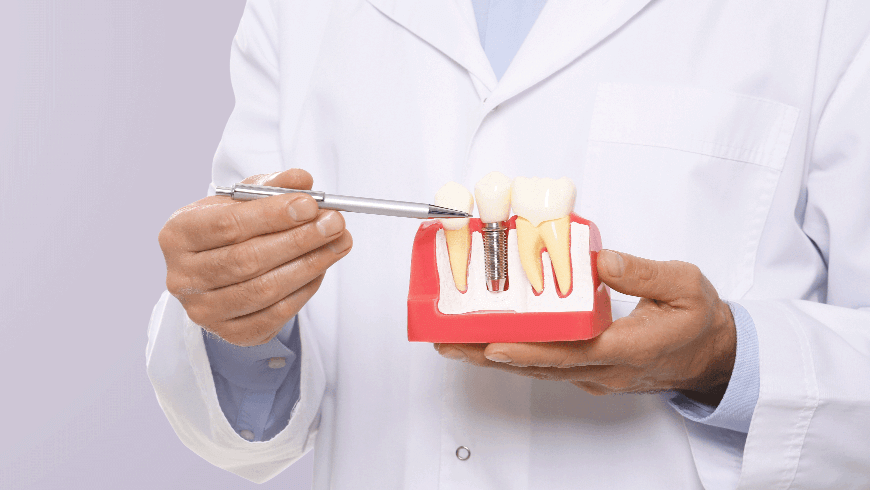
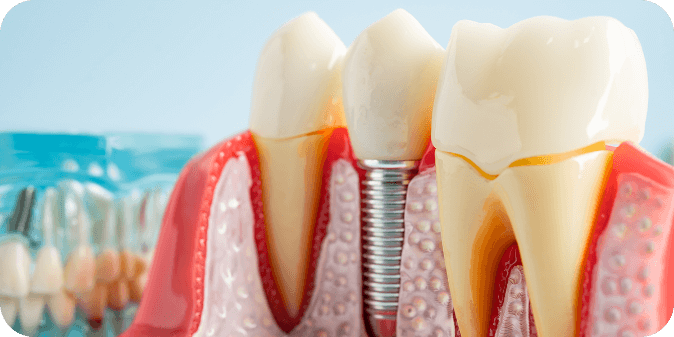
Dental implants are small posts placed into the jawbone to replace missing tooth roots. Once healed, they provide a strong foundation for crowns, bridges, or dentures. Unlike removable options, implants are fixed in place to support long-term oral health.
Do You Need Dental Implants?
You may require dental implants if you:
- Are missing one or more teeth
- Struggle with gaps or loose dentures that affect chewing
Your dentist will take detailed scans of your teeth and jaw to assess the bone quality and gum health before recommending implants.

What to Expect During Treatment
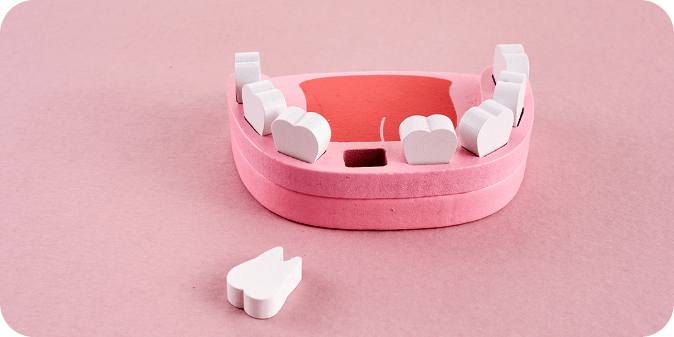
Dental implant treatment is completed over several stages:
1. Consultation and Planning
The condition of your teeth, gums and jaws are assessed to ensure the implants can be inserted safely. At this consultation and planning stage, the number of implants you need, the type of restoration (crown, bridge or denture), timeline and costs are outlined.
2. Pre-implant Procedures
Depending on the state of your oral health, you may require additional procedures such as bone grafting, sinus lift, or gum treatment. Depending on the procedure, additional time to heal will be required.
3. Implant Placement
Implant placement is considered a minor surgical procedure, and is typically performed under local anaesthesia.
To insert the implant, a small opening is made in the gum. You should not feel any pain. The implant is then placed into the jawbone, and the gum is stitched.
After the procedure, it is normal to experience soreness and swelling. You may be prescribed medication to help manage the pain. Your dentist will also provide instructions on how to care for the implant to promote healing and minimise discomfort.
4. Healing and Osseointegration
Following the procedure, the implant will integrate with the surrounding bone. This process is known as osseointegration, and it ensures that the implant can properly support chewing force and proper tooth function. This healing stage can last 3-6 months or longer.
5. Abutment Placement
After the implant is fully integrated, a small connector known as an abutment is attached to the implant. The abutment joins the implant and final crown or bridge. An opening is made in the gum again to expose the implant in order for the abutment to be attached. The gum will heal over 1-2 weeks before the final stage.
6. Final Restoration
Once the gums are fully healed, your dental prosthetic (crown, bridge or denture) is attached to the abutment. You should be able to eat and speak normally soon after. Your dentist will provide instructions on how to care for your new prosthetics, and also arrange regular follow-up for routine maintenance.

